
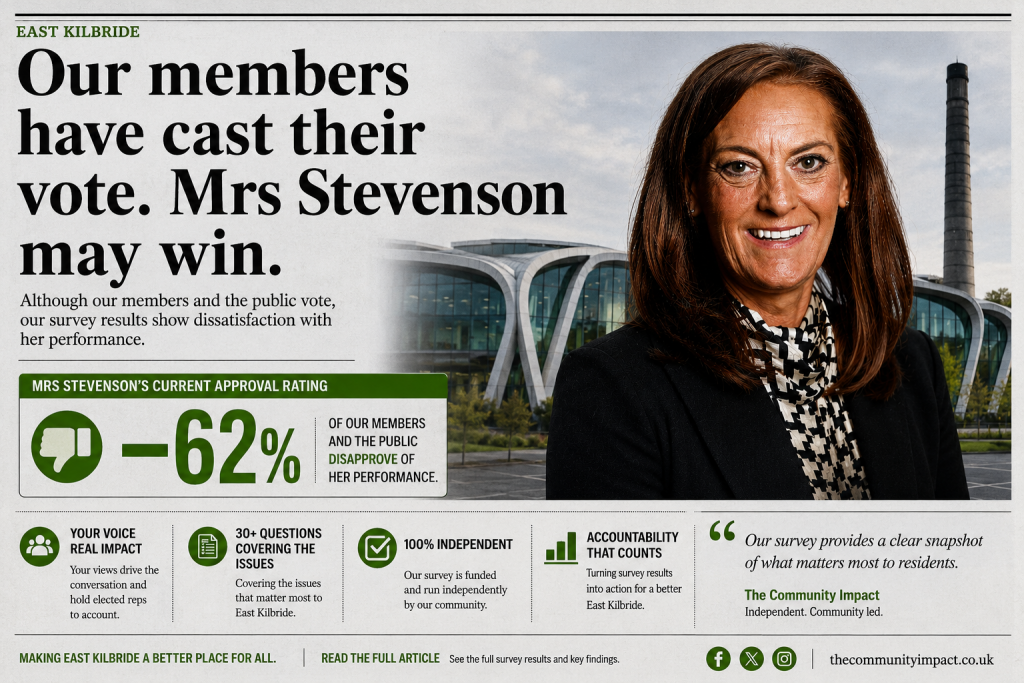
A majority of residents surveyed by The Community Impact / East Kilbride Neighbourhood Watch have expressed growing frustration with local services, NHS access, cost of living pressures and political representation across East Kilbride. We extended participation in our independent survey right up until 6 May 2025 at 8PM to ensure as many residents as possible had the opportunity to contribute.
While Collette Stevenson MSP may still retain the constituency for the SNP at the next election if national polling trends are accurate, the findings from our independent community survey suggest many residents no longer feel confident that those elected to represent them are effectively addressing the issues affecting everyday life in the town.
The survey, conducted independently by The Community Impact / East Kilbride Neighbourhood Watch, covered more than 30 questions and gathered responses from residents across East Kilbride, including both affluent and more deprived communities.
The demographic breakdown itself paints an interesting picture and allows a broader overview of public sentiment locally.
Most respondents came from households of two people, although single occupancy homes and larger family households were also represented. The majority of participants were aged between 45 and 75, representing a demographic often heavily reliant on local NHS services, chronic condition management, public transport and community infrastructure.
90% of respondents stated they intend to vote at the next election, suggesting strong civic engagement despite growing frustration with politics overall.
Healthcare pressures emerged as one of the defining concerns across the survey. NHS access, GP waiting times and hospital pressures ranked as the single biggest issue affecting households, ahead of housing and crime concerns.
Seventy percent of respondents stated they or a family member had experienced long waiting times for treatment, while 95% stated getting a GP appointment was either “somewhat not easy” or “extremely not easy”. Residents also rated local services such as GP surgeries, pharmacies and dentists poorly overall, with only a very small minority describing services as “good” or “excellent”.
Many respondents raised concerns privately and publicly surrounding pressure on Hairmyres Hospital being sent to Wishaw which we have published an article on patient rights and the right to choose on, lengthy waits for treatment and difficulties navigating NHS systems. Having operated our advocacy and support services since our founding, we are acutely aware how complex NHS systems can be for ordinary residents, particularly vulnerable patients and families already under stress.
Many residents also highlighted frustration that patients in England increasingly have access to more integrated NHS systems and digital services through the NHS App, allowing them not only to order repeat medication and book appointments, but in most cases view records, manage referrals and select hospitals for treatment or surgery. We are still issuing paper prescriptions here in Scotland. This is a major failure of the Scottish Goverment to not update with the times.
Residents questioned why similar fully integrated systems have not been implemented more widely across Scotland, particularly given repeated political commitments regarding NHS modernisation and reform again and again.
As a result of these concerns, we have already taken direct action. Our Chairman, Mr KJ Yates, a long time NHS management consultant and PM who has managed GP practices including ones with patient populations exceeding 19,000, recently submitted a detailed Freedom of Information request to NHS Lanarkshire regarding proposed GP walk in services and wider healthcare planning and how they plan to do this. The tax payer in lanarkshire pays a locum GP around £800 or more for a days work. They can often dictate terms such as no blood test results to do or letters and have no investment in patient outcomes that the family GP does for those who still have one.
The request seeks clarity surrounding workforce pressures, operational planning, patient safety, continuity of care, consultation processes and whether NHS Lanarkshire has properly assessed the impact further service fragmentation could have on already overstretched GP practices and frontline NHS staff.
The request also raises concerns surrounding Scotland’s continued reliance on fragmented systems and processes, with many GP practices and admin teams already operating under intense workload pressures compared with more integrated systems elsewhere in the UK. Public confidence in support systems also appears weak.
More than half of respondents stated they do not feel supported navigating NHS or social care systems when trying to access help or support services. While we hope more people reach out to organisations such as ours for advocacy and support, many residents believe this level of intervention should not be necessary simply to navigate public services.
Community safety and antisocial behaviour also featured heavily throughout the survey. We noted Mrs Stevenson has not done much on this front other than statements.. Almost half of respondents stated they had noticed increases in antisocial behaviour or crime, while many said they no longer feel safe in their local area. Knife crime and youth violence remain major concerns for residents, with a majority stating they are either “very concerned” or “somewhat concerned” about the issue.
Questions submitted directly by members of the public reflected these concerns. Residents asked what more could be done to reduce youth violence, support victims, tackle antisocial behaviour and restore pride and safety to communities across East Kilbride. Economic pressures continue to dominate daily life for many households.
The cost of living crisis ranked among the highest concerns affecting residents, with most respondents stating rising costs have had either a moderate or severe impact on their lives. Council tax bills were identified as the single biggest financial pressure facing households, closely followed by utility bills and food costs Joe Fagan if interviewed would of been quizzed on this as a current councillor seeking Mrs Stevensons seat.
Many respondents stated they had been forced to cut back on essentials during parts of the month simply to manage financially. Through our own advocacy work, we have already supported residents in obtaining council tax reductions and single person discounts, something many residents believe should be publicised more proactively by public bodies themselves.
A repeated theme throughout responses was the perception that residents are increasingly paying more while receiving less in return. Public transport was another major area of dissatisfaction.
Only a very small minority rated public transport in East Kilbride positively, while most respondents described services as poor or badly needing improvement.
Housing and local infrastructure concerns were repeatedly raised throughout the survey. Most residents rated housing provision only “fair” or “poor”, while many also reported experiencing issues involving repairs, councils or housing services.
Questions submitted directly by the public focused heavily on council housing waiting lists, potholes, local investment and wider concerns regarding visible decline within parts of East Kilbride. Town centre decline and lack of investment also ranked highly among the biggest issues affecting households we have covered the re development which takes prime real estate for homes with a tiny fraction for rent controlled.
One of the most politically significant findings involved trust in elected representatives, an issue many residents believe is becoming increasingly widespread nationally. This could of been resolved if partys which we reached out to all participated in either podcast, short interview or dedicated clip for our membership could of helped.
95% percent of respondents stated they do not believe elected representatives properly listen to their concerns. We have already requested a meeting with East Kilbride councillors regarding the findings and currently await confirmation of a suitable date to discuss what practical action can be taken to help restore trust and engagement locally. We seek to work with anyone who wishes to improve our town and the wellbeing of residents,
Disappointedly when members and non members were asked to rate their current MSP Collette Stevenson SNP, the majority rated performance as “poor”, although the survey also reflected broader dissatisfaction with politics and government more generally rather than focusing solely on one individual or party.
The Scottish Government received largely negative ratings across key areas including health, housing and education, while the UK Government similarly scored poorly regarding cost of living support. Immigration and pressure on local services also emerged as a concern for some residents. Something the Scottish Government is in favour of.
A majority of respondents stated they do not believe East Kilbride should see increased immigration at present, while most also stated they do not believe local services currently have the capacity to support additional population pressures. Youth opportunity was another major concern.
80% of respondents stated they do not believe there are enough opportunities locally for young people, reflecting wider anxieties surrounding employment, antisocial behaviour, investment and long term prospects for younger generations growing up within the town.
The public questions submitted directly to our survey perhaps captured the mood most clearly. Residents asked why East Kilbride residents still face lengthy travel times for hospital treatment, what is being done about housing shortages and why local decline appears to continue despite years of political promises. Others questioned whether politicians and public bodies are being properly held accountable for service failures affecting residents daily.
Mrs Stevenson has regularly positioned herself publicly around themes of social justice, community engagement and local representation. While she declined invitations to participate in an interview with our organisation, we recognise the pressures and demands placed upon candidates during election periods.
Nevertheless, we believe elections work best when communities have opportunities for open discussion, scrutiny and direct engagement with those seeking to represent them.
As we stated we offered multiple opportunities and flexible interview formats because we believe residents benefit from hearing directly from candidates on the issues affecting their lives and communities.
Given ongoing polling pressures facing the SNP nationally, many residents may reasonably ask whether government should now focus less on constitutional division such as independence when governing the devolved issues still isn’t stable and the increase of War and division across the globe, The survey reflected more on a wish addressing the repeated concerns being raised around NHS waiting times, local services, infrastructure decline, housing shortages and public confidence.
The findings within this survey do not represent every resident in East Kilbride, nor do they represent endorsement of any political party.
However, they provide an important snapshot into public sentiment across parts of the town at a time when confidence in institutions and political leadership appears increasingly fragile.
At the heart of this survey was a simple principle. Residents deserve to be heard and that has definitely not happened despite our best efforts but we will try our best to find another time to do an interview or a podcast.
Leave a Reply
You must be logged in to post a comment.