
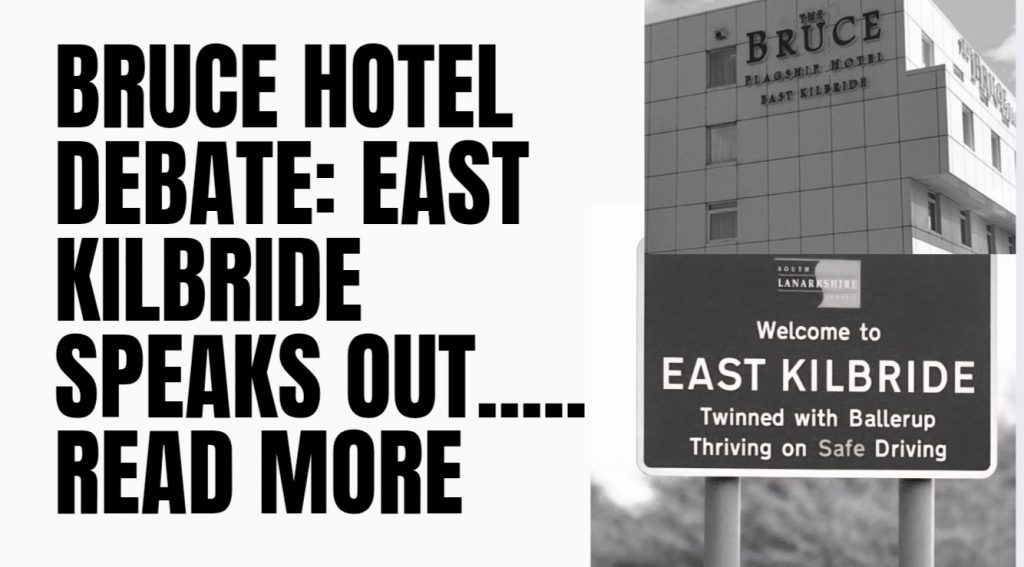
East Kilbride’s Bruce Hotel: From Civic Landmark to Controversial Accommodation
Following my initial article on The Bruce Hotel, the level of public engagement has been striking. Scotland prides itself on being welcoming but has the government taken it too far?
By KJ Yates, Chief Executive & Chairman, The Community Impact Project
31 October 2025
Following my initial article on The Bruce Hotel, the level of public engagement has been striking. If you didn’t read that first piece, The Bruce, constructed in 1968 as part of East Kilbride’s New Town vision, was intended as a civic and social hub. Its brutalist architecture reflected the optimism of the era, and for decades it hosted weddings, conferences, school celebrations, and community events. In 2013, under the ownership of Douglas Douglas, the hotel was refurbished to maintain its status as a vibrant local venue, preserving its role as a centre of social cohesion and economic activity. The hotel’s history illustrates not only the town’s evolution but also the way public and private spaces intersect with community life.
In recent years, however, The Bruce’s role has shifted dramatically. The Home Office repurposed it as temporary accommodation for asylum seekers as part of a UK-wide emergency housing strategy. Currently, around 60 residents live there, predominantly young adult males, with numbers expected to fluctuate in line with government policies. This change has raised practical questions around public services, housing availability, and community cohesion—questions that The Community Impact Project / East Kilbride Neighbourhood Watch, felt compelled to explore in depth.
It is important to stress that questioning policy decisions is not, in any way, opposition to immigration. Scotland is widely known for its welcoming and inclusive communities. Our concern is practical and grounded in professional experience: the need for transparency, the strain on already stretched services, and the requirement that communities have a voice in decisions that directly affect them.
Community Voices and Public Debate
The first survey, limited to the Community Impact Project and East Kilbride Neighbourhood Watch members, revealed that 77 percent of respondents opposed the use of The Bruce as asylum accommodation. When EK News reported the results, the post attracted hundreds of comments and shares, demonstrating that residents are paying attention and that these are tangible concerns affecting daily life.
Comments from the community illustrate a wide range of perspectives. Some residents question planning approvals and the definition of “temporary emergency accommodation.” Others emphasise local pressures, such as the effect on town centre businesses, safety concerns, and the availability of social services. Many raise questions about transparency and communication, noting that residents were not formally consulted before the hotel’s repurposing. Others stress compassion, integration, and the importance of support for those seeking safety.
These discussions are reflective of a community trying to reconcile competing priorities: support for vulnerable people, protection of local resources, and a desire for clarity and accountability from government and public services. The debate highlights the complexity of asylum accommodation and the real impact of policy decisions on everyday life.

Housing, Public Services, and Healthcare Pressures
The pressures on housing in East Kilbride are significant. South Lanarkshire Council declared a housing emergency in 2024, reporting a 38 percent rise in recorded homelessness, a 28 percent increase in homelessness applications, and a 101 percent increase in the urgent housing list. Over 100 social housing units have been redirected for asylum use, while construction of 1,000 new affordable homes progresses slowly due to financial constraints. Child poverty remains a pressing issue, and many working households face in-work poverty. The placement of emergency accommodation in high-profile central locations like The Bruce magnifies these pressures.
Healthcare services are similarly impacted. GP practices are required to register asylum seekers, and while additional funding is provided, no practice can refuse registration. Post-COVID, informal agreements allowing patients already registered elsewhere to be deferred were revoked, increasing workload and operational pressure. The Scottish Government has pledged £531 million over three years to increase GP recruitment and capacity, yet these measures cannot immediately offset the challenges presented by emergency accommodation and the associated social and mental health demands.
Policy changes surrounding family reunification have also influenced community dynamics. Until recently, male asylum seekers could bring family members later, meaning a single placement could expand into multiple households, with subsequent impacts on housing, schools, and local services. Many families remain affected by this previous policy, which the community must consider to fully understand the current situation.
Political oversight continues to be a key concern. While Home Office documents provide detail on accommodation strategy and Joani Reid MP has published reports on asylum housing, these do not fully address local operational pressures, service challenges, or gaps in communication affecting communities. MSPs, including Collette Stevenson, must clarify their positions on resource allocation, safety, and planning for East Kilbride’s future. Local residents deserve transparency regarding how national decisions influence investment, regeneration, and public confidence.
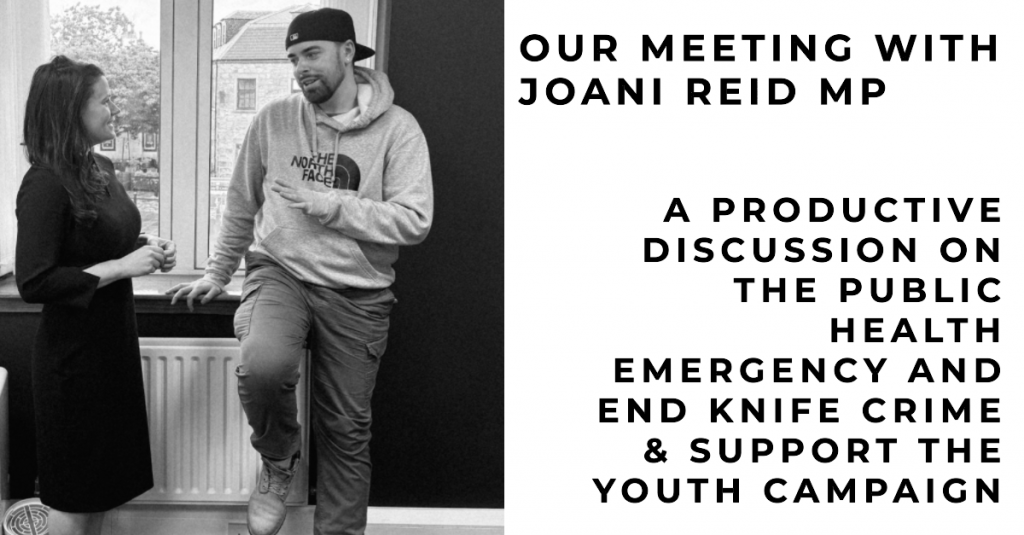
(photo from earlier this year at MP Joani Reids Constituency Office for our End Knife Crime Support The Youth Campaign)
Investigative Approach and FOI Requests
To better understand these dynamics, The Community Impact Project submitted Freedom of Information requests to multiple authorities. To the Home Office, we requested:
- Copies of any impact assessments conducted prior to or during the hotel’s use as asylum accommodation.
- Details of occupancy, past and projected.
- Information on support services, including health, social, and integration support.
- Expected duration of use.
- Analysis of local impact covering public services, schools, businesses, town centre activity, and community feedback.
- Safety and safeguarding assessments.
- Any review or exit plans.
To South Lanarkshire Council, we requested similar documentation, with an emphasis on planning, operational correspondence, and financial impact.
To NHS Lanarkshire, we sought records on GP registrations, service assessments, and impact reports relating to mental health, counselling, and additional healthcare provision. Freedom Of Information responses are expected within a month, and they will provide critical evidence for constructive dialogue with decision-makers.
From my own experience in healthcare and social care management, I understand how crucial timely, accurate information is for operational planning. If councils or services are underinformed, pressure points emerge unexpectedly, with consequences for residents, vulnerable individuals, and staff alike. Capturing this evidence through FOIs, surveys, and media engagement allows us to advocate effectively, ensuring decisions are sustainable, transparent, and accountable.
Media, Panorama Findings, and Broader Context
Media engagement is also central to our approach. I will be participating in an interview to provide a clear, factual perspective on the operational and community impacts rather than focusing on immigration itself.
Panorama’s documentary on asylum housing in the UK confirms that gaps in oversight, delays in processing, and inconsistent local support can create systemic pressures, reinforcing the need for informed, evidence-based discussion in every affected town.
The Bruce Hotel is not merely a building. Its transformation from a civic and social landmark to emergency accommodation illustrates the complex interplay of policy, public services, economics, and community experience. Every decision at national or local level has tangible local consequences—from housing shortages to GP workloads, from town centre activity to social cohesion. By documenting these impacts, listening to residents, and providing evidence to decision-makers, we aim to ensure that East Kilbride’s voices are heard and acted upon.
Residents’ personal stories further underscore the stakes. Parents share concerns about their children’s safety; shopkeepers note shifts in foot traffic and business patterns; service providers detail the strain on healthcare and social work capacity. These narratives, alongside Freedom Of Information Reports and evidence hopefully from our survey will prompt investigations or a review that demonstrate the real-world effects of policy decisions made usually by the civil service. President Raegan once said the most frighting statement is “im from the government and im here to help”….
The Community Impact Project is committed to continuing this investigative work. To capture the fullest picture possible, we are now launching a detailed survey open to all East Kilbrides resident you can submit your opinion and lived experience.
This survey explores perceptions of safety, healthcare pressure, housing and social service impact, community cohesion, and town centre vitality. By sharing your experiences, you help shape evidence-based recommendations and ensure that policy implementation aligns with community needs
We will continue to update this story as we receive the Freedom Of Information Reports and political input is received. At present, no political leaders nor the management of The Bruce Hotel have provided comment. Our commitment is to ongoing, evidence-based reporting and to ensuring that the voices of East Kilbride residents are central to every discussion and decision impacting their town.
Click for the survey below, let us know how you feel in the comments section, How has this impacted you? what are your concerns? Alternatively you can email contact@thecommunityimpact.co.uk
Leave a Reply
You must be logged in to post a comment.